Wildlife Diary for April 2017

In Memory of Phil Davis (1941-2017)

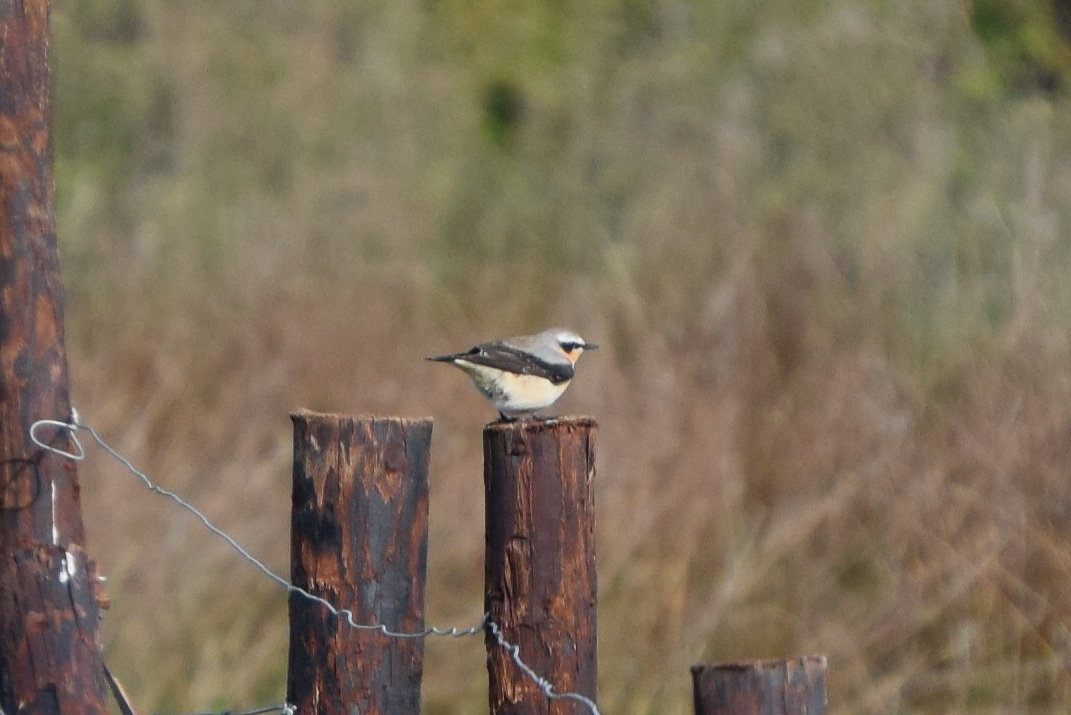
Wheatear

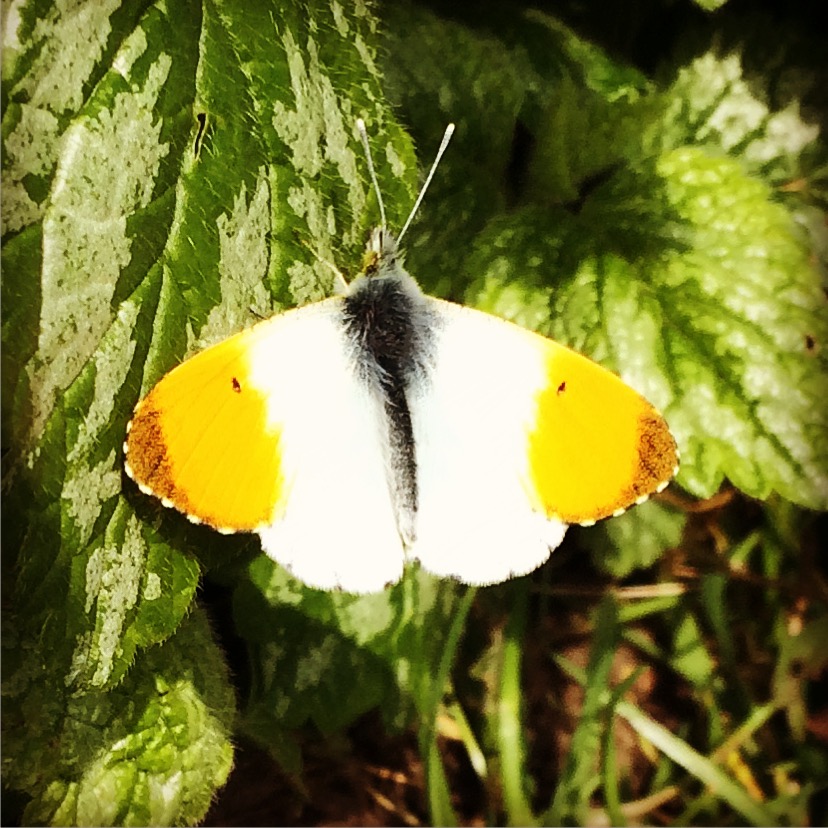
30th April, a beautiful sunny spring morning, and the Davis family and the Long Buckby Green Spaces committee hold a ceremony to remember Phil Davis. We install an Oak bench looking over the park, and plant an Oak tree by the lower picnic area. We see Brimstone, Orange-tip, Peacock and Small tortoiseshell. There are hundreds of St Mark’s Flies dancing in the stillness. We see 4 Swallows, a Buzzard, and the first Yellow Wagtails of the year.

At Hanglands NR on strimming duty I hear a Jay, and on The Banks, with the park flock, Donna and I see 30 Starlings, 2 Song Thrush and a Wheatear whilst checking the Lambs. And to end a very busy day I see a large Bat sp around the white mercury street lamp on Church Street on the way back from the OKH quiz.

26th April, a bitterly cold northerly wind convinces me that northbound migrants would want to go to ground. Eyes watering, and numb fingered , I birdwatch the top of the village, pre-work and am finally rewarded by a cracking male Wheatear at my last port of call, Cotton End Park.

Cowslips

Dog Violet

23rd April, Happy St. George’s Day. The CEP Sunday work party is, as usual, more of a social event in the morning sun. Some mowing and trimming whilst the birds sing is all good fun.

St Marks Fly are on the wing, two days before the event, and Common Whitethroat are noted. Mark Jelley reports a Little Egret and sends some photos. Swallows, mainly singles reported.

22nd April, a lone Fieldfare, is particularly late, in the fields of the West Haddon Road. Alan sees a Green Sandpiper on the GUC at The Wharf, and Large White is reported.

19th April, working along Holyoake and 3 House Martins appear. Red Kites about, always lower over the village than any Buzzard would dare. Cowslips, Dog Violet and a strange cup fungi of the Peziza family noted.

Fox

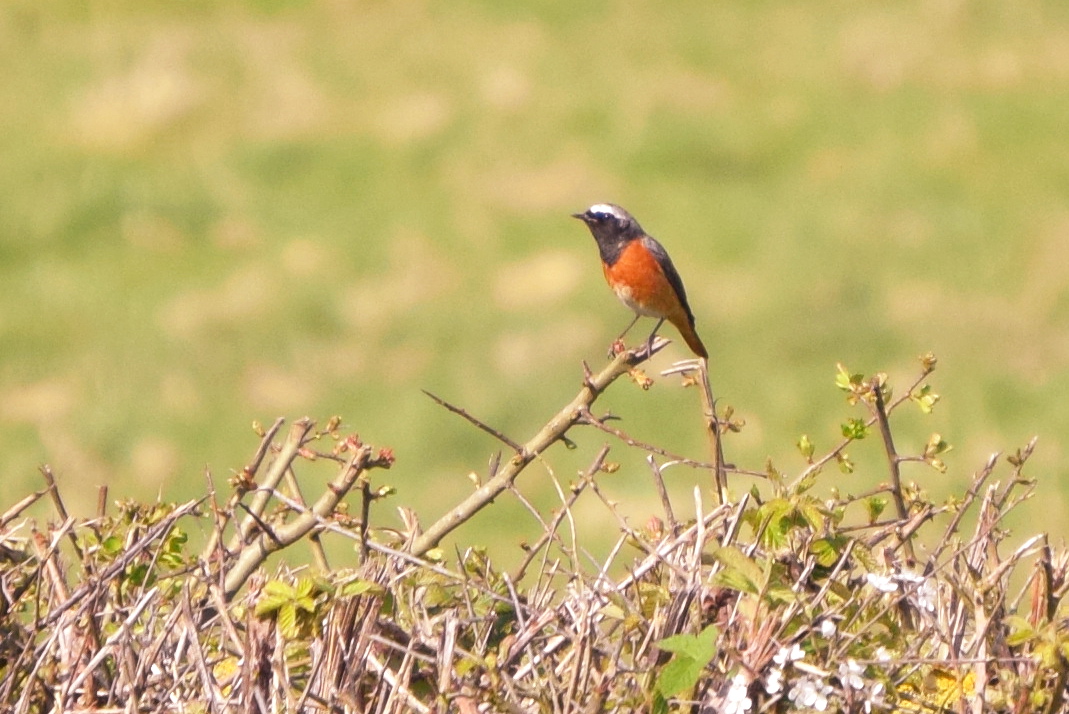
Redstart

17th April, at Patford Bridge, a singing Lesser Whitethroat adds to the list of incoming Warblers. At Oak Tree Farm ponds, a pair of Tufted Duck is busy avoiding the Canada’s. 15th April, in the excellent paddocks behind Berryfield/Lime Avenue, 4 Swallows are noted and a male Redstart pops up in front of me. Quick to raise the camera, the resulting shot is a blur of hedge and sky.

13th April, 2 singing Willow Warbler, join the Blackcap and Chiffchaffs at the park. A Raven silent for once, flies over with a crop full of food.

8th April, a late Snipe at CEP is a surprise, and Small Whit a and Peacock are seen. Brian notes Green Field Speedwell (a declining native wildflower) in the village. Mr Evans sees for the first time in years, a Dabchick (Little Grebe) at his ponds. Richard sees 3 Swallows on the Brington Road, and Mike a possible Stonechat.

Comma

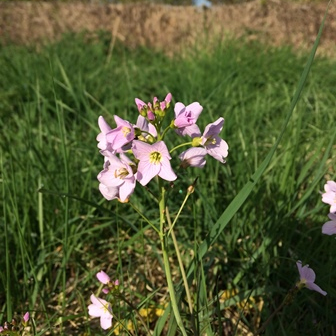
Lady’s Smock

Orange tip

7th April, I walk Yolanda and her friends through Mill Park at 0530 and we hear 15 species singing before it gets light. Inspired I go to CEP and flush a Green Sandpiper from the new pond, see 3 late Fieldfare, and a fab’ male Redstart at Grange Farm. What a day.

6th April, Richard reports Bats over The Leys. And a Bee-fly (another indicator species) noted at Armley.

Wildlife Diary for March 2017

Comma

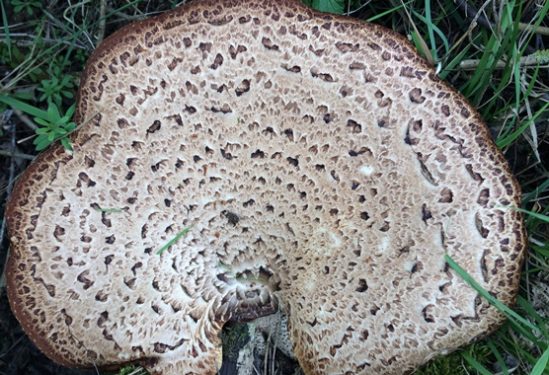
Dryads Saddle

30th March, More sun! Terry Laney and I see Orange-tip, his at South Close mine at Armley, perhaps the earliest we’ve known. At Hanglands one or two Peacocks and Small torts’ are already laying eggs on the emerging Nettles. The last of the winter thrushes, 20 Fieldfare with 1 Redwing are still in the paddock with 4 Starling. Daniel reports 2 Comma’s, and David Evans

describes the activities of perhaps 3 Nuthatches that have been raiding his bird feeders. Brian reports a flowering Elm, Slow Worm, 2 Toads and Chiffchaff.

28th March, Dave describes a Stoat, Daniel reports a pair of Reed Bunting, Anne finds Cedar Cup fungi, and David sees Bats. Hares are seen off Brington Road and at Murcott.

25th March, as migration is under way I give time to Sandy and Lodge Lanes. The winter coldness is matched by seeing 100plus Fieldfare, and a Common Gull, but the spring is represented by song-flighting Greenfinch and singing Linnets and Great Tit. At Murcott I ‘scope the lake and see 6 gadwalls, 12 teal, 8 mallards, 3 Moorhen and 2 Canada’s.

At Grange Farm, a spot of lambing duty is rewarded by very close views of Red Kite, and we find a huge bracket of fungi on an Ash stump – Dryad’s Saddle.

Hares

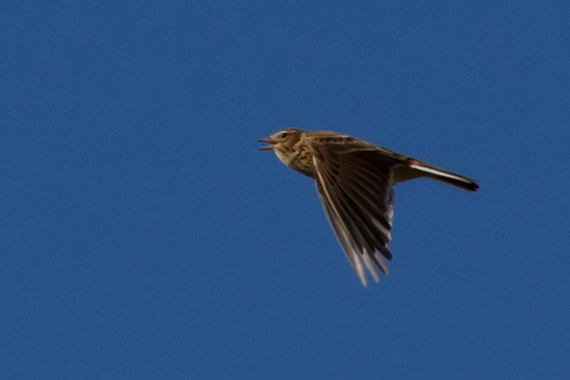
Skylark

24th March, we count 28 Frog spawns and 1 Toad spawn, in 5 different water areas at the Park, and Skylark and Chiffchaff are singing well.

19th March, at CEP a pair of Raven and a Red Kite are soaring together for five minutes but of course, my camera is elsewhere and I’m covered in mud. A nervous female Reed Bunting is watching us, but we work on perhaps making less noise.

17th March, I am working at Murcott Mill and whilst unloading to, ls hear Chiffchaff, and Little Owl and see Buzzard and Grey Wagtail. Brian rescues a Great-crested Newt from a drain on Berryfield. Dean reports an odd goose with the flock of Canada’s at Oak Tree Farm ponds. We think it could be a Greylag/Canada cross.

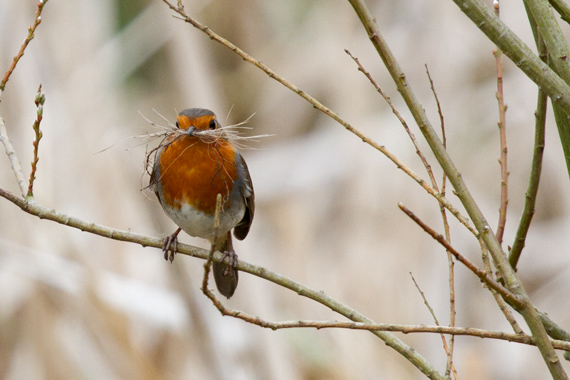
Robin

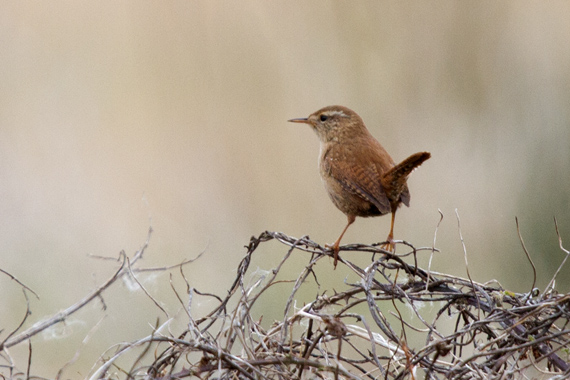
Wren

15th March, sunny weather brings out Brimstone, Peacock, Small Torts’, and Red-tailed Bumblebee. Mike and Beth report Brimstone, and Keith reports Little Egret at Bridge House Farm Lake.

13th March, I am working at Winwick and hear my first Chiffchaff of the year. CEP has one very precious Gorse bush and even though it flowers continually there is now a hint of the scent of vanilla from the flower heads.

12th March, Dave and Adam, my top CEP volunteers, see 2 Common Snipe, and Brian reports a Barn Owl near Patford Bridge on the Brington Road.

Windfall

Yellowhammer

Frogs

11th March, foggy and damp but this doesn’t stop Chaffinch, Yellowhammer, Goldfinch, Skylark, Great and Blue Tit, Goldcrest, Treecreeper, Wren, Dunnock, Robin, Blackbird, Song and Mistle Thrush, and Reed Bunting from singing at CEP on my walk-about first thing. Wood Pigeon, Stock Dove, Jackdaw, are seen and overhead small parties of Redwing and Fieldfare are in and out of the fog banks, joined by a single Meadow Pipit.

9th March, today is the funeral of our friend and colleague Phil Davis. He was with me from the start, and as a then parish councillor worked to bring my ideas of a new community park to fruition. Long Buckby Green Spaces and Cotton End Park owe him so much.

The church is packed, and the sunshine floods in. And to add a bit of magic, a newly awoken Small Tortoiseshell flies about over our heads as if personally tasked with announcing the arrival of spring.

Wildlife Diary for Winter 2016/2017

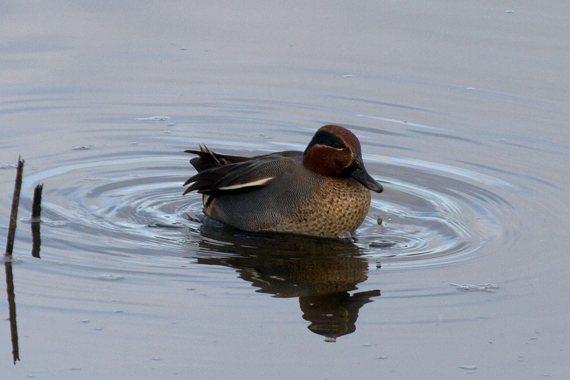
Teal

Long Tailed Tit

As the summer ends this year’s juvenile birds start to gather in flocks. In the gardens, noisy mixed groups of young Great and Blue Tits are joined by Goldcrests, Long-tailed, and Coal Tits. Out on the fields, Chaffinches and Yellowhammers gather with family parties of Skylarks and Linnets. Flock sizes of these species used to number in the hundreds, but in recent years have declined to a few handfuls.

Ploughing and drilling follow the harvest and just for a few hours, thousands of Gulls appear including Lesser Black-backed and Black-headed, but also with the odd Herring and Common Gulls. Swallows and Martins congregate on the lines making ready to migrate, although their main predator, the Hobby is still about, now with her family. Soon they will all leave to spend the winter in Africa.

Migrating birds from northern climes are passing through the parish and include moorland summer visitors like Wheatear, Ring Ouzel, Meadow Pipit, and Stonechat. The hedgerows have parties of Warblers also heading south including Whitethroat, Blackcap, Lesser Whitethroat, and Chiffchaff. A Willow Warbler and two Spotted Flycatchers also appear for an afternoon but then move on. Both were once regular breeding birds in the village, now only rare visitors.

A few resident Dragonflies and Butterflies are still about, Common Darter of the former and Red Admiral of the latter being seen until late October, though in recent years I have recorded Red Admiral on the wing in every month of the year. Some of our insects also migrate, and we have a couple of sightings of Humming-bird Hawk-moth and Clouded Yellow Butterfly, both originally from southern Europe.

Fungi

Male Bullfinch

The warm, damp conditions bring out Fungi, and Field Blewitt, Blackening Waxcap, Shaggy Inkcap, Purple Brittle-gill, and Horse Mushroom are found. As continental Europe gets colder the UK sees a steady influx of birds seeking our relatively mild climate.

Thousands of Woodpigeons, Blackbirds, Song Thrushes, Robins, Finches, Wagtails and Starlings, arrive in the parish, and some set about what’s left of the hedgerow fruit. They are joined for the winter by Redwings and Fieldfares from Scandinavia, and Lapwing, Snipe, Woodcock, Jay, Grey Wagtail, Redpoll, Siskin, Peregrine, and Green Sandpiper are also noted in the parish, and can just as easily be from the continent as from northern Britain.

Muntjac and Roe Deer, Hare, and Polecat are reported by the shooting and hunting fraternity. These gentlemen provided tens of acres of invaluable, long-term habitat for our local native wildlife, also the various plantations, and cover crops, as well as game bird feeders, go a long way to helping birds through the winter months.

A mild start to the winter sees a Bat reported on the wing in early December, also an under-sized Hedgehog. The short days see an upturn in Owl records including a handful of Barn Owl and Little Owl sightings from Grange Farm and Station Road.

Redwing

Greenfinch

As we approach Christmas a Little Egret moves into the parish, being seen several times along the streams between St Lawrence’s and Surney. A Blackcap is noted in a garden on Ashmore, and a pair of Gadwall (a duck species) and a white Grey Squirrel are seen at Cotton End Park. A sighting of Kingfisher on the canal at The Wharf, a Green Sandpiper and a Chiffchaff at Mill Park, and Nuthatches on feeders at Oak Tree Farm are also worthy of note.

I am pleased to report that there are now regular sightings of Otters at Ravensthorpe Reservoir also a Great White Egret has been seen there recently.

The Little Egret was surprising dog-walkers between Surney and Oak Tree Farm, with its habit of creeping along the stream-bed and leaping out at the last second, when disturbed. A Stoat with some white bits in its coat was seen at Cotton End Park, being chased and scolded by a gang of fierce Wrens. A handful of noisy Canada Geese are backwards and forwards over the village trying to decide where to nest, and although tempted not to look up, I can’t help myself and am duly rewarded by seeing 4 fly-over Cormorants as well.

The sight of Aconites and Snowdrops in flower is accompanied by the sound of a Mistle Thrush singing and a Great-spotted Woodpecker drumming. Light is the giver of life. Fairly regular Barn Owl records from sites North and West of the village suggests separate territories and is a testament to the effort some of our Farmers are putting in to save this species locally. Buzzards still don’t have enough warm air to soar but are content to sit on the overhangs, poles and hedges patiently staring downwards ‘Mixy’ Rabbits are noted, and may be on their menu.

Little Egret

Robin

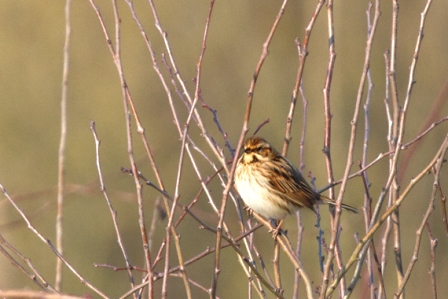
Reed Bunting

Now rare and irregular in winter, 7 lapwings pass over. What has happened to the wintering flocks that contented our parish? A Green Woodpecker yaffles if laughing at a private joke, but is seen off by a prospecting Kestrel, who’s just not in the mood. The list of bird species joining the dawn that contented weekly, and Blackbird, Song Thrush, Robin, Wren and Dunnock are practising hard, with the monotonous and repetitive ‘teacher-teacher’ of the Great Tit being easy to pick out.

Frog spawn on the 24th is nowadays believable and a barking Fox sets the dogs off. Moles are having a bit of a come-back and the Fieldfares and Redwings are picking away at their hills on our sheep pasture, prior to moving back North. A male Reed Bunting seems to have already attracted a mate but sings anyway from ponds at the Park.

A, or the Blackcap is seen again at Ashmore and also off East Street. In theory this is a wintering, Eastern European bird, and will soon depart making way for ‘our’ Blackcaps as they return from Africa in a month’s time. A sleepy Common Newt is reported, and the irrepressible Brian is out with his torch and bucket, assisting Toads across the roads. Shame the Badgers don’t have a similar hero.