

As the summer ends this year’s juvenile birds start to gather in flocks. In the gardens, noisy mixed groups of young Great and Blue Tits are joined by Goldcrests, Long-tailed, and Coal Tits. Out on the fields, Chaffinches and Yellowhammers gather with family parties of Skylarks and Linnets. Flock sizes of these species used to number in the hundreds, but in recent years have declined to a few handfuls.
Ploughing and drilling follow the harvest and just for a few hours, thousands of Gulls appear including Lesser Black-backed and Black-headed, but also with the odd Herring and Common Gulls. Swallows and Martins congregate on the lines making ready to migrate, although their main predator, the Hobby is still about, now with her family. Soon they will all leave to spend the winter in Africa.
Migrating birds from northern climes are passing through the parish and include moorland summer visitors like Wheatear, Ring Ouzel, Meadow Pipit, and Stonechat. The hedgerows have parties of Warblers also heading south including Whitethroat, Blackcap, Lesser Whitethroat, and Chiffchaff. A Willow Warbler and two Spotted Flycatchers also appear for an afternoon but then move on. Both were once regular breeding birds in the village, now only rare visitors.
A few resident Dragonflies and Butterflies are still about, Common Darter of the former and Red Admiral of the latter being seen until late October, though in recent years I have recorded Red Admiral on the wing in every month of the year. Some of our insects also migrate, and we have a couple of sightings of Humming-bird Hawk-moth and Clouded Yellow Butterfly, both originally from southern Europe.


The warm, damp conditions bring out Fungi, and Field Blewitt, Blackening Waxcap, Shaggy Inkcap, Purple Brittle-gill, and Horse Mushroom are found. As continental Europe gets colder the UK sees a steady influx of birds seeking our relatively mild climate.
Thousands of Woodpigeons, Blackbirds, Song Thrushes, Robins, Finches, Wagtails and Starlings, arrive in the parish, and some set about what’s left of the hedgerow fruit. They are joined for the winter by Redwings and Fieldfares from Scandinavia, and Lapwing, Snipe, Woodcock, Jay, Grey Wagtail, Redpoll, Siskin, Peregrine, and Green Sandpiper are also noted in the parish, and can just as easily be from the continent as from northern Britain.
Muntjac and Roe Deer, Hare, and Polecat are reported by the shooting and hunting fraternity. These gentlemen provided tens of acres of invaluable, long-term habitat for our local native wildlife, also the various plantations, and cover crops, as well as game bird feeders, go a long way to helping birds through the winter months.
A mild start to the winter sees a Bat reported on the wing in early December, also an under-sized Hedgehog. The short days see an upturn in Owl records including a handful of Barn Owl and Little Owl sightings from Grange Farm and Station Road.


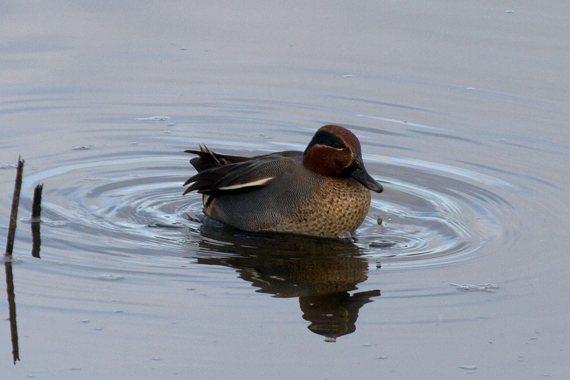
As we approach Christmas a Little Egret moves into the parish, being seen several times along the streams between St Lawrence’s and Surney. A Blackcap is noted in a garden on Ashmore, and a pair of Gadwall (a duck species) and a white Grey Squirrel are seen at Cotton End Park. A sighting of Kingfisher on the canal at The Wharf, a Green Sandpiper and a Chiffchaff at Mill Park, and Nuthatches on feeders at Oak Tree Farm are also worthy of note.
I am pleased to report that there are now regular sightings of Otters at Ravensthorpe Reservoir also a Great White Egret has been seen there recently.
The Little Egret was surprising dog-walkers between Surney and Oak Tree Farm, with its habit of creeping along the stream-bed and leaping out at the last second, when disturbed. A Stoat with some white bits in its coat was seen at Cotton End Park, being chased and scolded by a gang of fierce Wrens. A handful of noisy Canada Geese are backwards and forwards over the village trying to decide where to nest, and although tempted not to look up, I can’t help myself and am duly rewarded by seeing 4 fly-over Cormorants as well.
The sight of Aconites and Snowdrops in flower is accompanied by the sound of a Mistle Thrush singing and a Great-spotted Woodpecker drumming. Light is the giver of life. Fairly regular Barn Owl records from sites North and West of the village suggests separate territories and is a testament to the effort some of our Farmers are putting in to save this species locally. Buzzards still don’t have enough warm air to soar but are content to sit on the overhangs, poles and hedges patiently staring downwards ‘Mixy’ Rabbits are noted, and may be on their menu.


Now rare and irregular in winter, 7 lapwings pass over. What has happened to the wintering flocks that contented our parish? A Green Woodpecker yaffles if laughing at a private joke, but is seen off by a prospecting Kestrel, who’s just not in the mood. The list of bird species joining the dawn that contented weekly, and Blackbird, Song Thrush, Robin, Wren and Dunnock are practising hard, with the monotonous and repetitive ‘teacher-teacher’ of the Great Tit being easy to pick out.
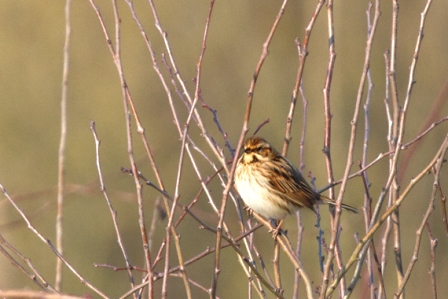
Frog spawn on the 24th is nowadays believable and a barking Fox sets the dogs off. Moles are having a bit of a come-back and the Fieldfares and Redwings are picking away at their hills on our sheep pasture, prior to moving back North. A male Reed Bunting seems to have already attracted a mate but sings anyway from ponds at the Park.
A, or the Blackcap is seen again at Ashmore and also off East Street. In theory this is a wintering, Eastern European bird, and will soon depart making way for ‘our’ Blackcaps as they return from Africa in a month’s time. A sleepy Common Newt is reported, and the irrepressible Brian is out with his torch and bucket, assisting Toads across the roads. Shame the Badgers don’t have a similar hero.