
It would be nice to say that March was any less wet than Feb’ but alas no. Not sure if colder water in the various ponds and puddles that are usually used by amphibians for breeding is putting them off egg-laying but there has only been one clump of frogspawn at CEP (21st March) so far, in previous years we’d have had dozens by now. The damper grassed areas there have suited the snakes-head fritillaries and the marsh marigolds which are showing well, and reed bunting and skylark have been heard singing nearby.
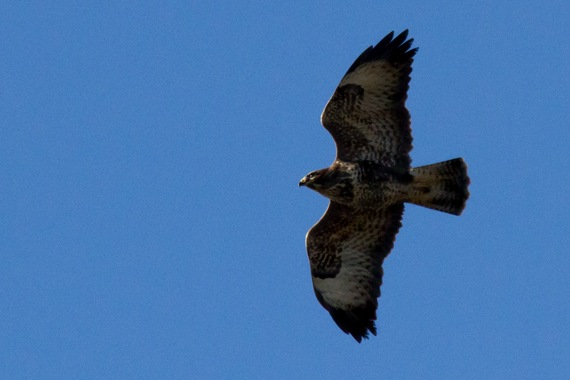
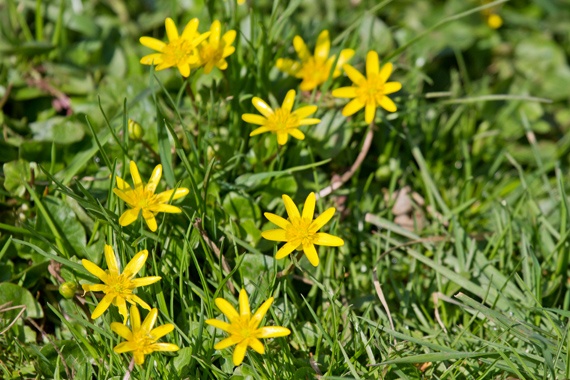
The first of the summer migrant birds, a small insectivous warbler called a chiffchaff, (you wait ‘til you hear it sing and you’ll know why…) was seen in gardens off South Close and Spencer Road on the 5th and David reported bats over Ashmore that evening. A single immature mute swan came low over the village on the 7th, the way it was going it must have landed in the centre of the village! But no reports of that. On that day Cath reported another summer visiting warbler, a blackcap, from off Wright Road and David a little egret off Lakeside with buzzards noted displaying nearby. On the 12th CEP had its Green Flag Award assessment and we saw a pair of mating frogs and yellowhammer and flowering plants included dandelion, coltsfoot, celandine and cowslip. Linnets and mistle thrush singing and several small flocks of fieldfare and redwing with many accompanying starlings were noted around the parish mid-month.
Brian Laney, who’s duties include ‘toad rescue’, at one location had over ninety toads in his bucket. These are animals that he moves from the road side to their breeding pond, literally ‘help a toad across the road’ as the tag-line says. He notes that some drivers still seem to aim for the toads as they are trying to cross.
The 15th is traditionally the date I seem to record a singing chiffchaff and on que one was in song at the top of Stenhouse Close. A good influx of these birds has occurred and the birders are speculating this is because there has been a generally mild winter but also this species used to migrate into North Africa to over-winter but now many are staying on the Iberian peninsular, thus making the journey back to the UK in spring less distance and less demanding.
16th Yellowness abounds with David Stoddart’s daffodils making a wonderful show at the entrance to CEP. The rooks have built nine nests and are so noisy that we have to speak up in our pre-work party discussions. Chiffchaff, buzzard, long-tailed tit, goldfinch and raven are vocal too. There are a dozen toads in one pond but no sign of any frogs.
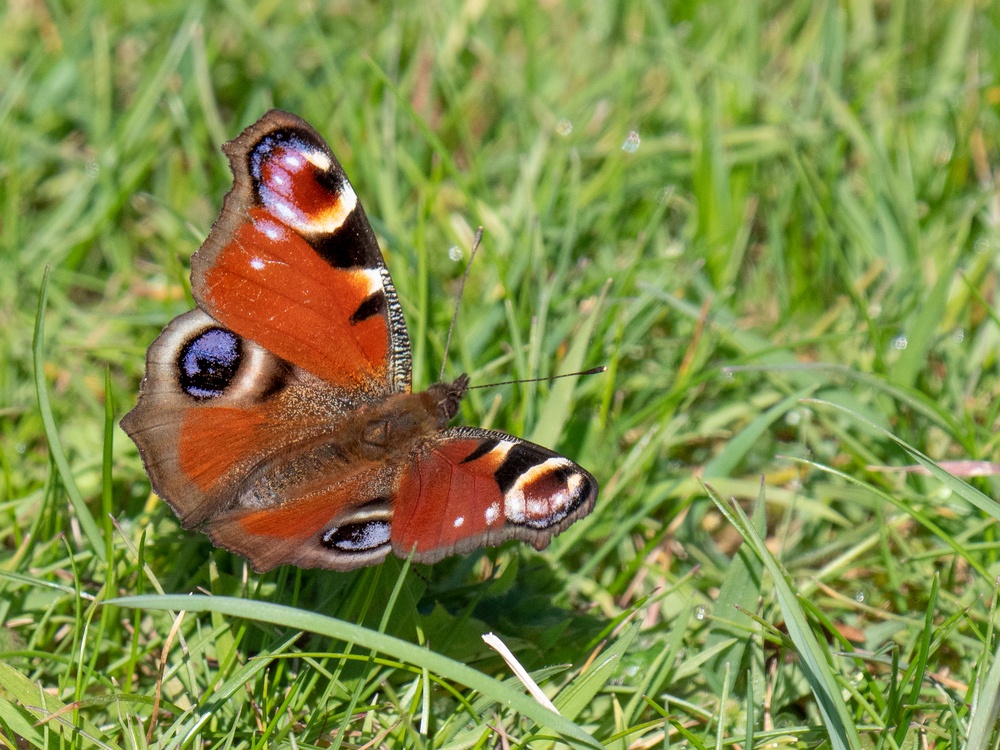
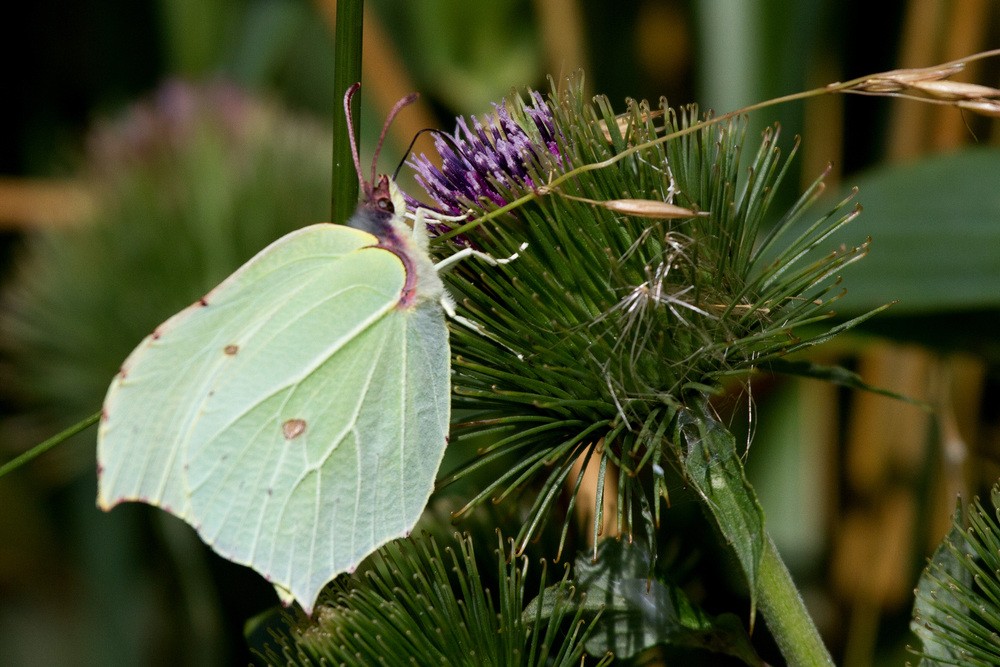
17th and a decent warm sunny afternoon sees a handful of male brimstones and a peacock butterfly reported.
21st Rick and Jane independently report the great egret from the overflow in the field of The Banks. To smaller things and a bee-fly is seen off The Leys and red admiral and brimstone from Chestnut Close. At CEP the number of chiffchaffs has reached six and there are twice that number of great and blue tits though fewer long-tailed, all now seem to be paired. Goldcrest also seen. A snipe is seen at CEP also mating buzzards.
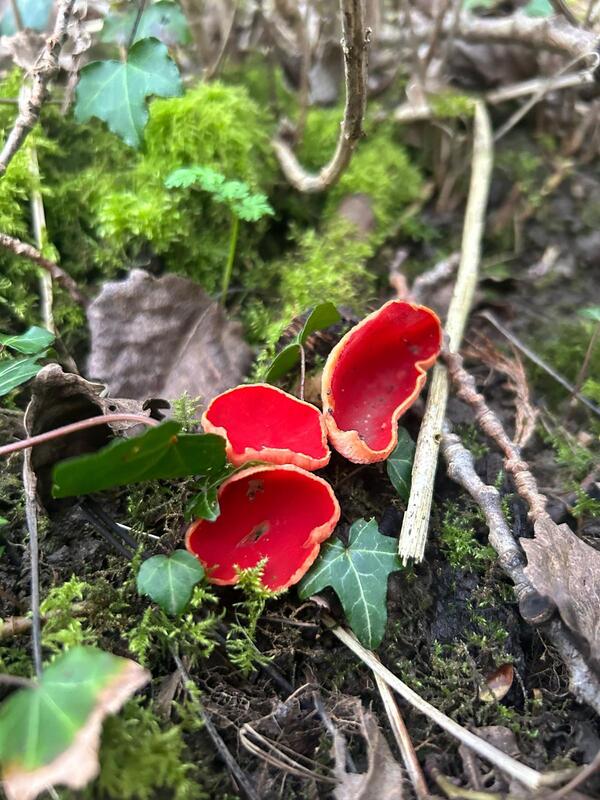
28th, the wet has brought forth fungi with St George’s mushroom, common cavalier and parrot wax-cap being noted and Jenny takes a great image of scarlet elf cup.
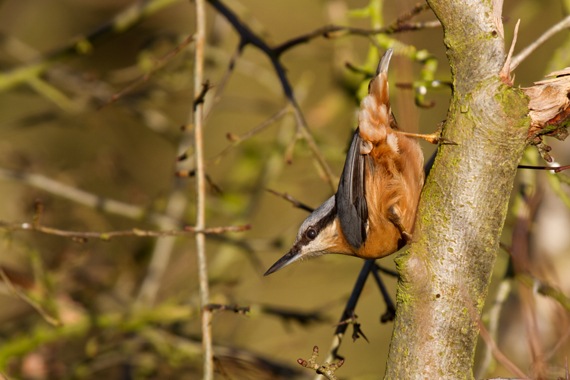
30th, a singing nuthatch at the park is unusual and blackcap, robin and song thrush are also vocal. There are 60 plus detectorists spread out over fields north of CEP, I wonder what they found? Our week-old lambs are doing well and we have one ewe left to lamb so hoping it’s soon. There are one or two siskins about over the village.

31st March is our Easter Egg Hunt at Cotton End Park. It is a great success due to the efforts of our volunteers and contributors. I get reports of rooks and red admiral from Hayley and brimstone and redpoll from Mark. We see a grey heron come over as we dish out the chocolate.
Dead road-side badgers reported and I learn that at least 50,000 are killed each year on our roads. Regardless of that figure the DEFRA badger cull continues and with a policy cost of an estimated £60 million of tax payer’s money, I do wonder if that amount of money could go to other struggling government departments. If the annual road-kill figures remain consistent what does that say about the value for money of the cull?
Thanks to David for the following weather data for March.. Maximum temperature was 16.5c at 1428h on the 15th, minimum was -4 at 0545h on the 3rd. Rain total, 87.2mm and over the last six months we have received 548.4mm.
Thanks for the update. Always interesting to read about our local wildlife.