
30th April, now a rare parish visitor, the one solitary Lapwing is again moved on by tractor work and heads towards Watford. I find an equally rare Grey Partridge, first one I’ve seen for a while. These are the only native ‘game’ bird we have and are in serious decline. I see dozens of Pheasants (introduced game-birds) about the parish on a daily basis and also the odd introduced Red-legged Partridge.
29th April, David sees Wheatear whilst shepherding at Oak Tree Farm. I see a Swift going north over the A45 near Dodford. A seems a good year for Hare’s with 7 reported from the Brington Road, 5 from fields around CEP, 6 from Surney and 2 from the Foxhill Road.
27th April, as bad as any littering yobbo, the Canada Goose pair are wrecking the pond area at CEP and this morning a pair of Greylag turn up to add the melee.
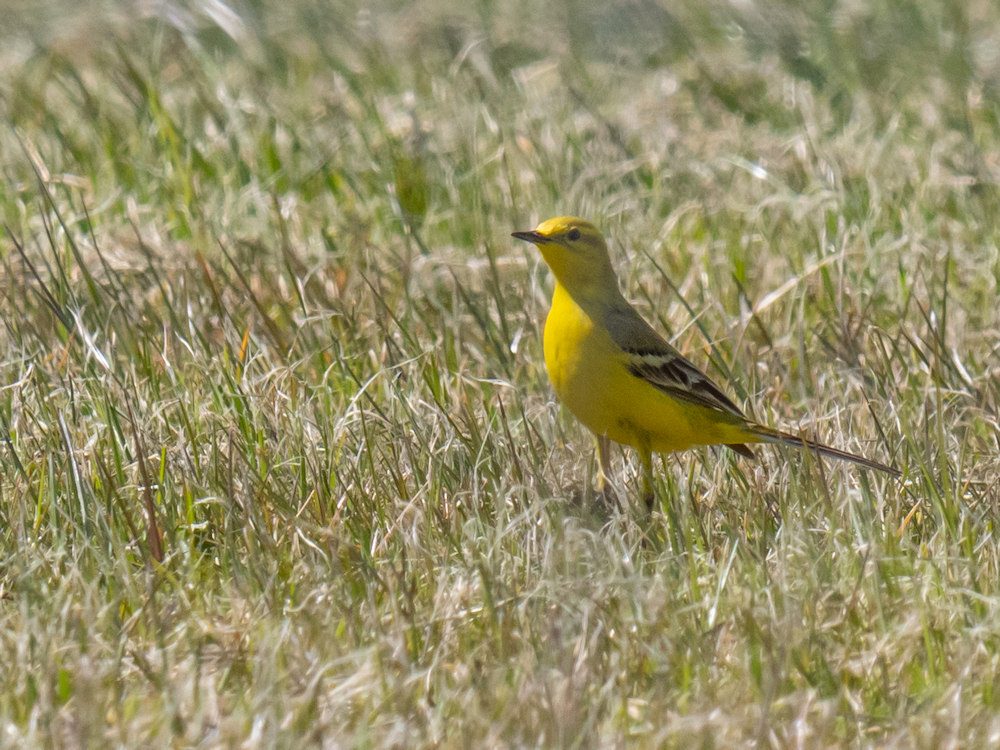
26th April, the Yellow Wagtail is still on the fence posts on Foxhill Road and the Lapwing is still about but the tractors are disc harrowing and the Lapwing is moved on. Many Skylark nests are presumably destroyed by this late work. St Mark’s Fly noted only 1 day out.
25th April a House Martin goes over Sharpe’s Lane at dusk.
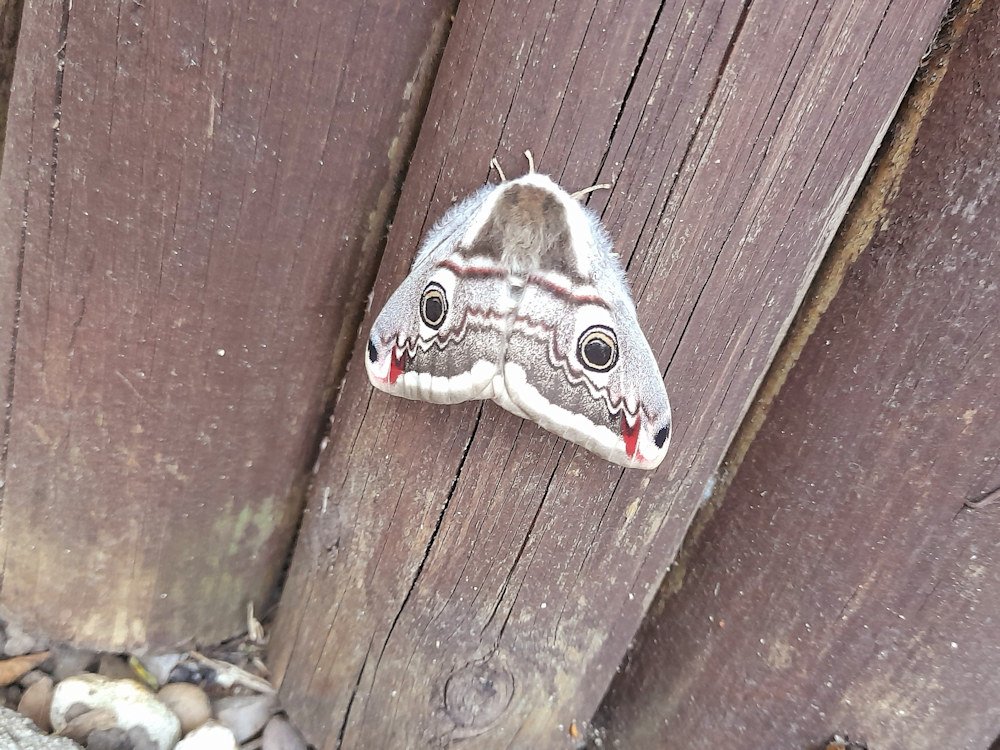
24th April, a bright male Yellow Wagtail is singing off Foxhill Road and 2 Redpoll fly over. Alan and Adam see Little Egret at The Wharf and Diana reports Peacock and Orange-tip. Becky sends a photo’ of Emperor Moths from Spencer Road. Along the track at the bottom of The Banks a pair of Wheatear and a Lapwing are feeding in Springe Hill field. A pair of Mute Swans and Canada Geese reported from Evans’ Pond.
23rd April, St George’s Day, 2 Whitethroats and 4 Fieldfares at CEP.
22nd April, 2 Whitethroat seen.
20th April, 2 Willow Warblers at CEP sing briefly then move north. A Redstart also moves north along the hedges at the far end. In the afternoon another north bound migrant, a Brambling, is feasting around the unopened buds of a Sycamore with a few Chaffinches for company.
How to tell an English Bluebell form an imported Spanish Bluebell. English have a narrow, droopy flower-head with rolled back lips and a sweat aroma. Spanish have an upright, conical, open lipped flower-head and no smell.
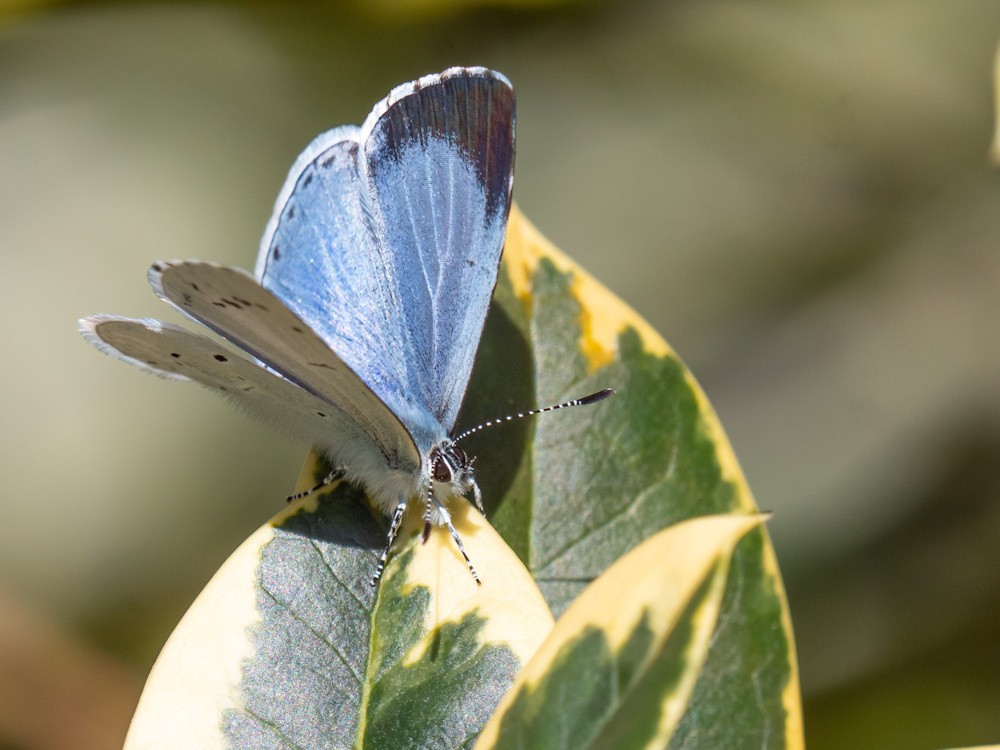
19th April, a quick dog walk and almost immediately I’m standing by a bramble patch at the end of Berryfield listening to a warbler sub-singing. I record it with my ‘phone and realise it is Reed Warbler. Further on I see two Redpoll feeding on some seed-heads. A good start to the day. PM and a Holly Blue is fluttering around my Ivy at home.
17th April, warm sun and butterflies at CEP include Orange-tip and Green-veined White and Sue sees Holly Blue in her garden. Lunchtime and I concentrate on looking for Bumblebees and see at least one each of Red-tailed, White-tailed, Buff-tailed, Tree, and Common Carder and many not well enough to ID. Drumming Woodpeckers reported from 3 areas near the village, and the Blackthorn Blossom is outstanding.
16th April, Alan has 3 female Siskin on his feeders. I see 6+ Fieldfare, Swallow and Skylarks off Lodge Lane, and at CEP 5 species of Thrush, 8 Blackbirds, 6 Fieldfare, 2 Redwing, 4 Song Thrush, and 2 Mistle Thrush. There are 3 male Reed Buntings, 2 each of Blackcap and Chiffchaff, and a Meadow Pipit.
15th April, Alan sees a large unidentified raptor going NW over The Wharf. Thea sees Roe Deer at Cotton End.
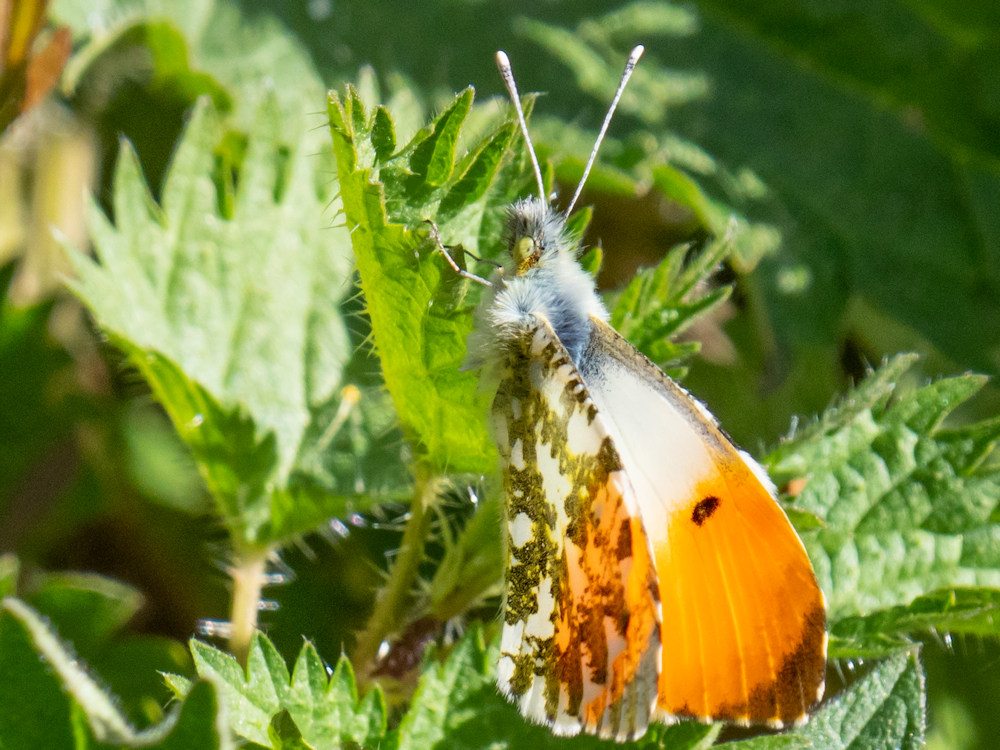
14th April, Alan reports Grey Wagtails from The Wharf. Mr Seymour perfectly describes a male Ring Ouzel and a Wheatear seen whilst shepherding off Lodge Lane. Ange reports a male Orange-tip Butterfly, first of the season.
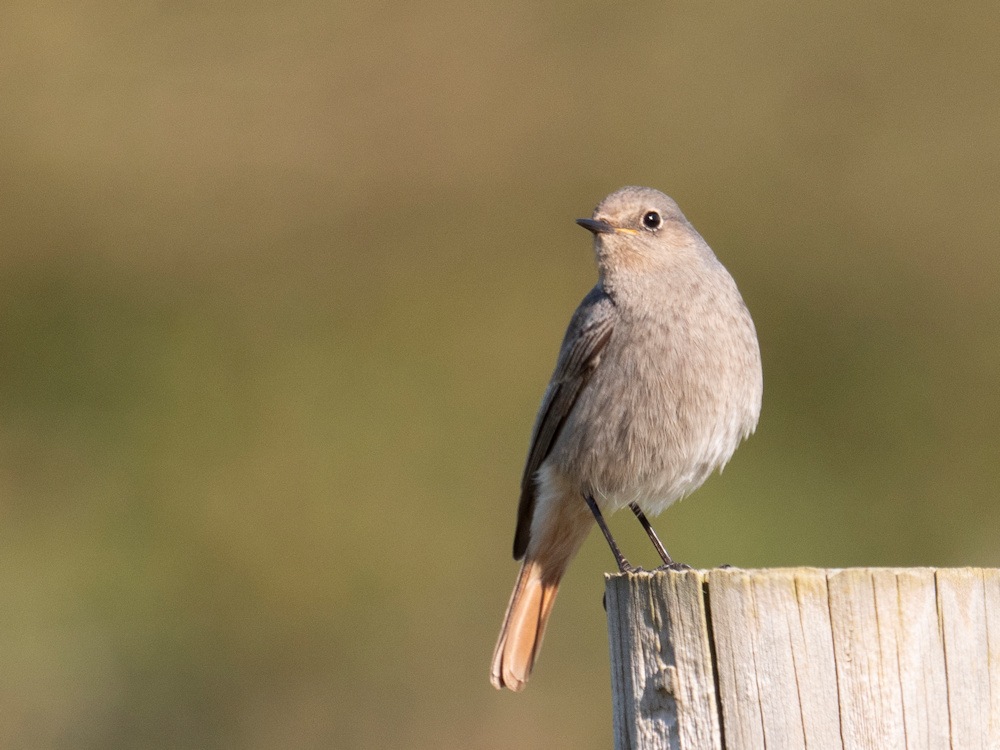
13th April, sun and no wind prompts me to walk the dogs before work. I can’t help but to scan the sheep paddocks at the bottom of The Banks in search of migrants. A distant pale flitting thing is not a Robin, Dunnock or even the hoped-for Common Redstart. It disappears and then amazingly appears flying towards me and actually pops up on a fence post right in front of me. It is a 1st summer male or female Black Redstart. Rare and unexpected. I ‘phone Chris who arrives with his camera and even though the bird is disturbed by passing cars he gets some excellent images.
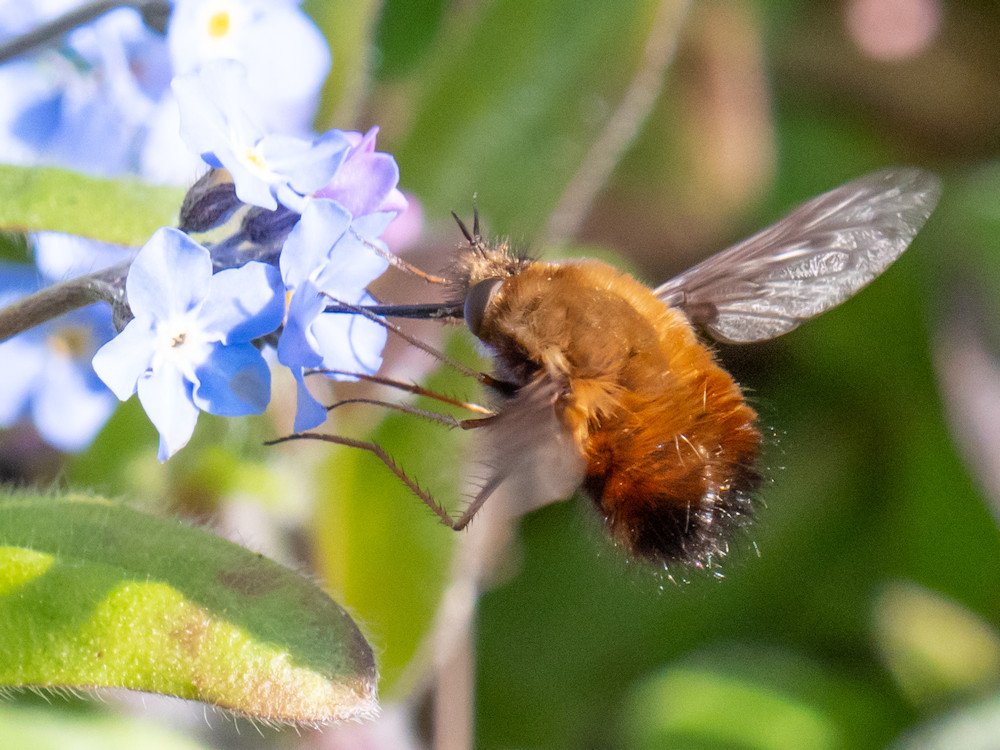
12th April, I’m standing in the sunshine but being hailed on. I see 30 Stock Doves with the crows and Wood Pigeons. Sue sees Bee Fly. Nestling and Fledgling Robins and Blackbirds reported, also Peacock butterfly. Jenny shows me a Wrens nest atop an old Swallows nest whilst we’re waiting for a ewe to lamb.
11th April, cold and clear, I am on lambing duty but get a quick dawn walk along Lodge Lane. Recently tilled fields hold 150 now summer plumaged Fieldfares, dozens of Blackbirds, Mistle Thrush, Meadow Pipits, Chaffinches and Yellowhammers. A group of 5 Pied Wagtails are nearest but I ignore them as I check out the pipits. Through the binoculars, one of the wagtails walks into my vision and is clearly a male White Wagtail, the continental cousin of our Pied. (Look it up) I now look at the rest of the wagtails but they all Pied.
10th April, still cold. At ponds off Foxhill Road, a pair of Mute Swans and Canadas, 1 Dabchick and 1 Moorhen. Nuthatch calling and 10 Meadow Pipits over. Tawny Mining Bee reported.
8th April, Swallow and Goldcrest fly over Marriotts Road.
6th April, Mr Seymour and the Ebbage’s both report Swallow, Louise a fly-over Lapwing.
5th April, snow and sun sometimes at the same time marks this Easter Monday. A dog walk ends far away with a quiet corner of the parish producing 10 Yellowhammer, 6 Chaffinch, 6+ Tree Sparrow, 2 Linnet and 5 Skylark. The farm has lambing ewes and we pop in to check all is well. We are rewarded a Lapwing going over as well as new lambs (small but strong). We bring them in to the pens as tonight may be too much for them.
4th April, CEP hosts an Easter Egg Hunt and the competition involves an anagram of a bird. It spells Swallow and several hours later I get a call from the great Evans who tells of a fly-by Swallow at Oak Tree Farm, Richard sees one over Brington Road. Oh the poetry of it all. David S sees 8 Buzzard soaring together and 3 Redpoll flyover.
2nd April, Mill Park Reserve is adorned with fabulous flowering Marsh Marigolds aka King Cup, Daffodils, Celandines, Violets, and Cowslips.